
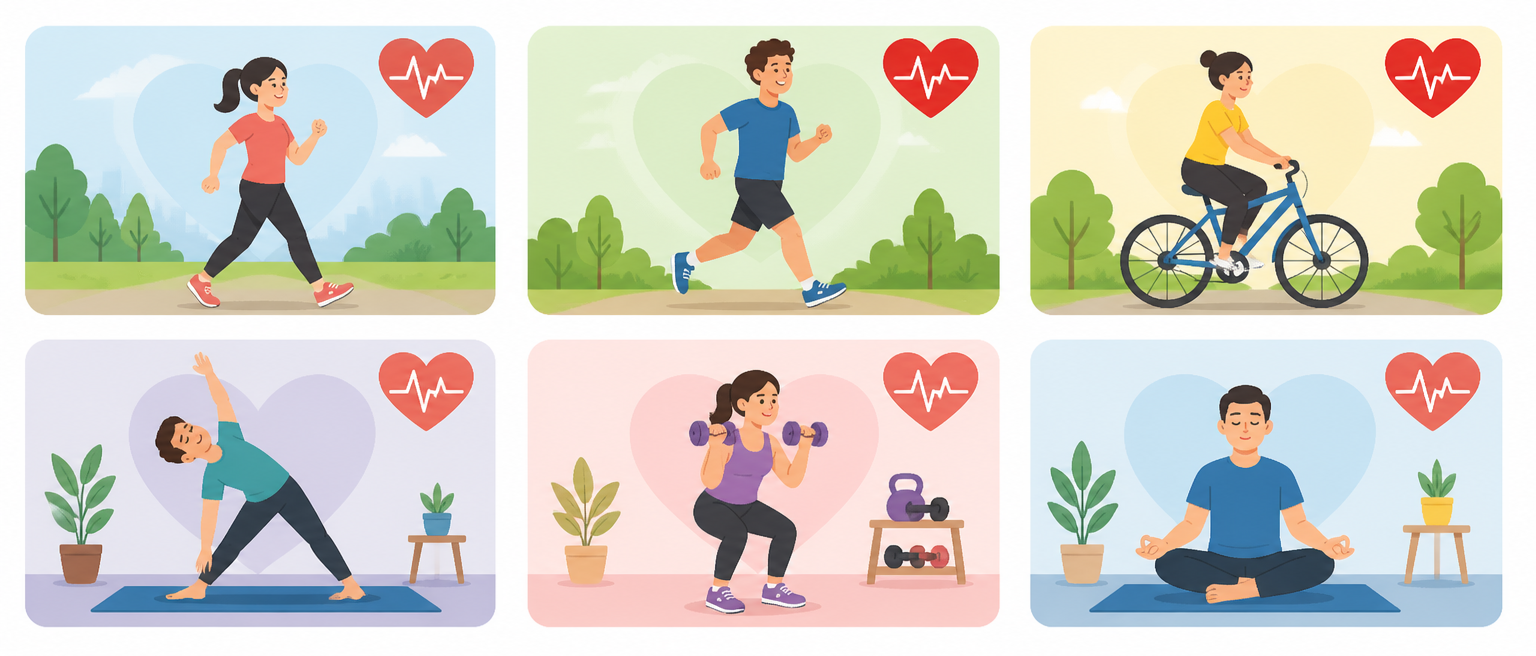
Regular physical activity is one of the most effective ways to care for your heart. As illustrated above, heart-healthy movement can take many forms—from walking and cycling to strength training, stretching, and meditation. The best routine is one that fits your health needs, abilities, and lifestyle.
Exercise can help lower blood pressure, improve cholesterol levels, support healthy blood sugar, reduce stress, and make the heart more efficient. You do not need to be an athlete to benefit. Starting with a few minutes of comfortable activity and gradually building consistency can make a meaningful difference.
1. Walking: A Simple Place to Start
Walking is accessible, low-impact, and easy to adjust to your fitness level. A brisk walk can raise your heart rate while placing less strain on the joints than many higher-impact activities.
If you are new to exercise, begin with short, comfortable walks. Gradually increase your pace, distance, or duration as your endurance improves. Even brief walks throughout the day count towards an active lifestyle.
Try this: Take a 10-minute walk after a meal, use the stairs when appropriate, or schedule a regular walking break during the workday.
2. Running: Building Cardiovascular Endurance
Running is a vigorous aerobic activity that can improve heart and lung fitness. However, it is not necessary for good cardiovascular health, and it may not be appropriate for everyone.
People who are new to running may benefit from alternating walking and jogging. Supportive footwear, rest days, and gradual progression can help reduce the risk of injury. If you have heart disease, joint problems, unexplained shortness of breath, or have been inactive for a long time, consult a healthcare professional before beginning a running programme.
3. Cycling: Heart-Healthy, Low-Impact Exercise
Cycling—outdoors or on a stationary bike—provides aerobic exercise with relatively low impact on the hips, knees, and ankles. It can be adapted for a wide range of fitness levels.
Choose a pace that increases your breathing while still allowing you to speak in short sentences. When riding outdoors, wear a helmet, follow traffic laws, remain visible, and avoid unsafe weather or road conditions.
4. Stretching and Yoga: Supporting Mobility and Balance
Stretching and yoga can improve flexibility, mobility, posture, and balance. Although these activities may not always provide the same cardiovascular benefits as brisk walking or cycling, they can complement aerobic exercise and strength training.
Some styles of yoga also encourage slow breathing and relaxation, which may help with stress management. Avoid forcing a stretch or holding positions that cause pain, dizziness, or difficulty breathing. Certain inverted or strenuous poses may not be suitable for people with specific cardiovascular conditions.
5. Strength Training: More Than Building Muscle
Strength training helps maintain muscle mass, supports bone health, and makes everyday activities easier. It may also improve blood pressure, metabolism, and overall physical function.
Adults are generally encouraged to include muscle-strengthening activity at least two days per week. Options include resistance bands, weight machines, free weights, or body-weight movements such as supported squats and wall push-ups.
Use controlled movements and breathe continuously. Holding your breath while lifting can cause a temporary rise in blood pressure. Start with manageable resistance and focus on proper form rather than lifting the heaviest weight possible.
6. Meditation and Stress Management: Caring for the Mind and Heart
Meditation is not a replacement for physical activity, but it can be an important part of a heart-healthy lifestyle. Ongoing stress may affect sleep, blood pressure, eating habits, and other behaviours related to cardiovascular health.
Mindfulness, paced breathing, and guided meditation can help create moments of calm. Even five minutes of quiet breathing each day may be a practical starting point.
How Much Activity Should You Aim For?
For many adults, general health guidelines recommend:
- At least 150 minutes of moderate-intensity aerobic activity per week, or 75 minutes of vigorous activity
- Muscle-strengthening activities on at least two days per week
- Less prolonged sitting and more light movement throughout the day
- A gradual increase in activity based on fitness level and medical needs
These are general recommendations—not an all-or-nothing requirement. Any safe increase in movement may offer benefits, especially for someone who is currently inactive.
Exercise Safely
Talk with your cardiologist or healthcare professional before starting or significantly increasing exercise if you:
- Have known heart or vascular disease
- Recently had a heart attack, procedure, or hospitalisation
- Experience chest pressure, unusual shortness of breath, fainting, or palpitations
- Have uncontrolled high blood pressure
- Have diabetes, kidney disease, or other significant medical conditions
- Have been inactive and plan to begin vigorous exercise
Stop exercising and seek prompt medical attention if you develop chest pain or pressure, severe shortness of breath, fainting, sudden weakness, or other concerning symptoms. Call emergency services for symptoms that may indicate a heart attack or stroke.
Find Movement You Enjoy
A heart-healthy routine does not have to centre on one activity. You might walk on one day, cycle on another, add strength exercises twice a week, and use stretching or meditation to support recovery and stress management.
Consistency matters more than perfection. Start where you are, progress gradually, and choose activities you can safely enjoy over time.
This article is for general educational purposes and is not a substitute for personalised medical advice, diagnosis, or treatment.